By Skip Foster, Red Tape Florida
Leon County wants to send a delegation to Europe to pursue something ambitious: making Apalachee Regional Park the permanent home of the World Athletics Cross Country Championships.
Let’s start here: fiscal skepticism is healthy. We appreciate it. Taxpayer dollars deserve scrutiny.
But there is a time to pinch pennies — and there is a time to press an advantage.
This looks like the latter.
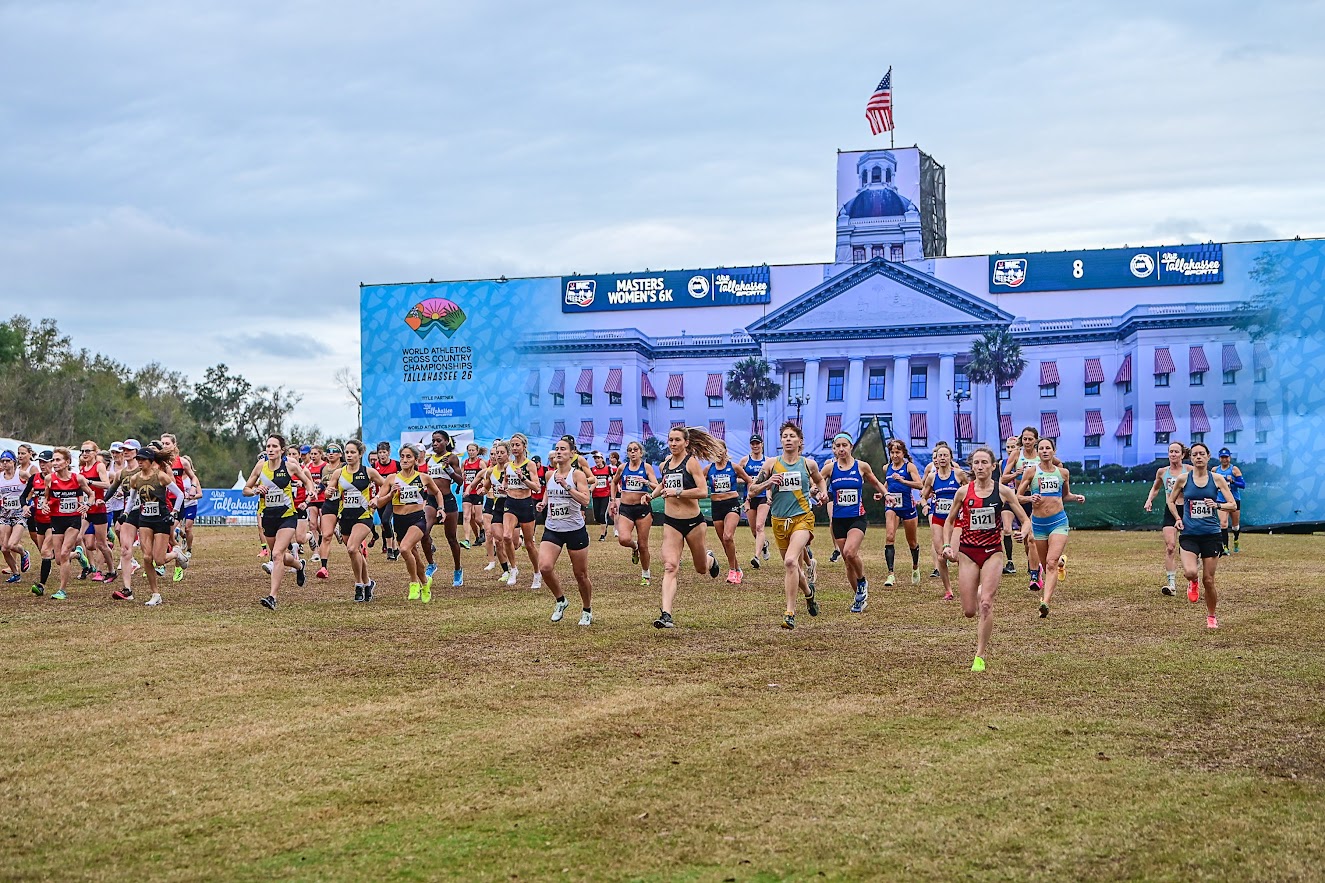
Leon County just hosted the 2026 World Athletics Cross Country Championships — the first time the event returned to the United States since 1992. Nearly 500 athletes from 52 countries competed at Apalachee Regional Park. More than 10,000 spectators attended. Broadcast coverage reached over 70 nations.
Preliminary projections presented to the Board estimate more than $4 million in direct economic impact.
Notice what that number is not.
It’s not $40 million. It’s not $75 million. It’s not padded with imaginary multipliers and “lifetime branding value.”
It’s a grounded, realistic number. And that makes it more credible.
If anything, given the attendance and international exposure, it may prove conservative when final numbers come in.
More importantly, this wasn’t a one-off experiment. Apalachee Regional Park has already generated $84 million in direct spending since 2013 through repeat championships and national events. The infrastructure is built. The course is proven. World Athletics President Sebastian Coe publicly called it “the best cross-country course in the world.”
That is leverage.
And leverage is something you use.
The travel being requested is not junketing. It is business development. It is follow-through. It is relationship management at the highest level of an international governing body that controls where future championships are awarded. And there is a chance a deal can be reached even without the travel.
But, if Leon County believes it can position ARP as the permanent home of this event — the way Omaha became synonymous with the College World Series and Williamsport with the Little League World Series — then this is exactly the moment to lean in.
The travel cost is estimated to be less than $20,000 and would come from bed tax dollars, not property tax revenue.
This is what those dollars are for.
Commissioner Rick Minor was the lone “no” vote on authorizing travel for the Chairman to join staff in upcoming in-person meetings with World Athletics leadership. Minor’s fiscal responsibility is laudable, but he appears to have missed the big picture of investing in a pitch to secure a strong return.
The County’s visionary approach is in stark contrast with other local approaches to “recognition.” The City of Tallahassee spent roughly $150,000 pursuing All-America City designation — a program that may bring civic pride and a nice plaque, but does not generate recurring tourism revenue, hotel nights, or international broadcast exposure.
There is nothing inherently wrong with civic awards. But let’s be honest about the difference.
One strategy produces a press release.
The other can produce repeat economic activity.
One is about recognition.
The other is about recurring business.
Leon County, under the leadership of County Manager Vince Long and his team, took a former landfill and turned it into one of the most respected cross-country venues in the world. That didn’t happen by accident. It happened through long-term investment and strategic follow-through.
Trying to lock in permanent-host status is not reckless. It is a calculated extension of a proven success.
There is always room for debate about travel. There is always room for caution.
But when you have momentum, international praise, realistic financial projections, and a tourism funding source designed for exactly this purpose — this is not the time to step back.
It’s time to run through the tape.