By Skip Foster, Red Tape Florida
Siesta Key has become a case study in a familiar Florida contradiction: communities that depend heavily on tourism and redevelopment dollars while simultaneously trying to prevent redevelopment from occurring.
A recent decision by the Sarasota County Commission on Nov. 12 to reject a Comprehensive Plan amendment underscores that tension sharply. According to coverage in the Observer, the proposal would have allowed aging, nonconforming condominium communities to voluntarily rebuild at their existing unit counts rather than conforming to today’s lower density limits
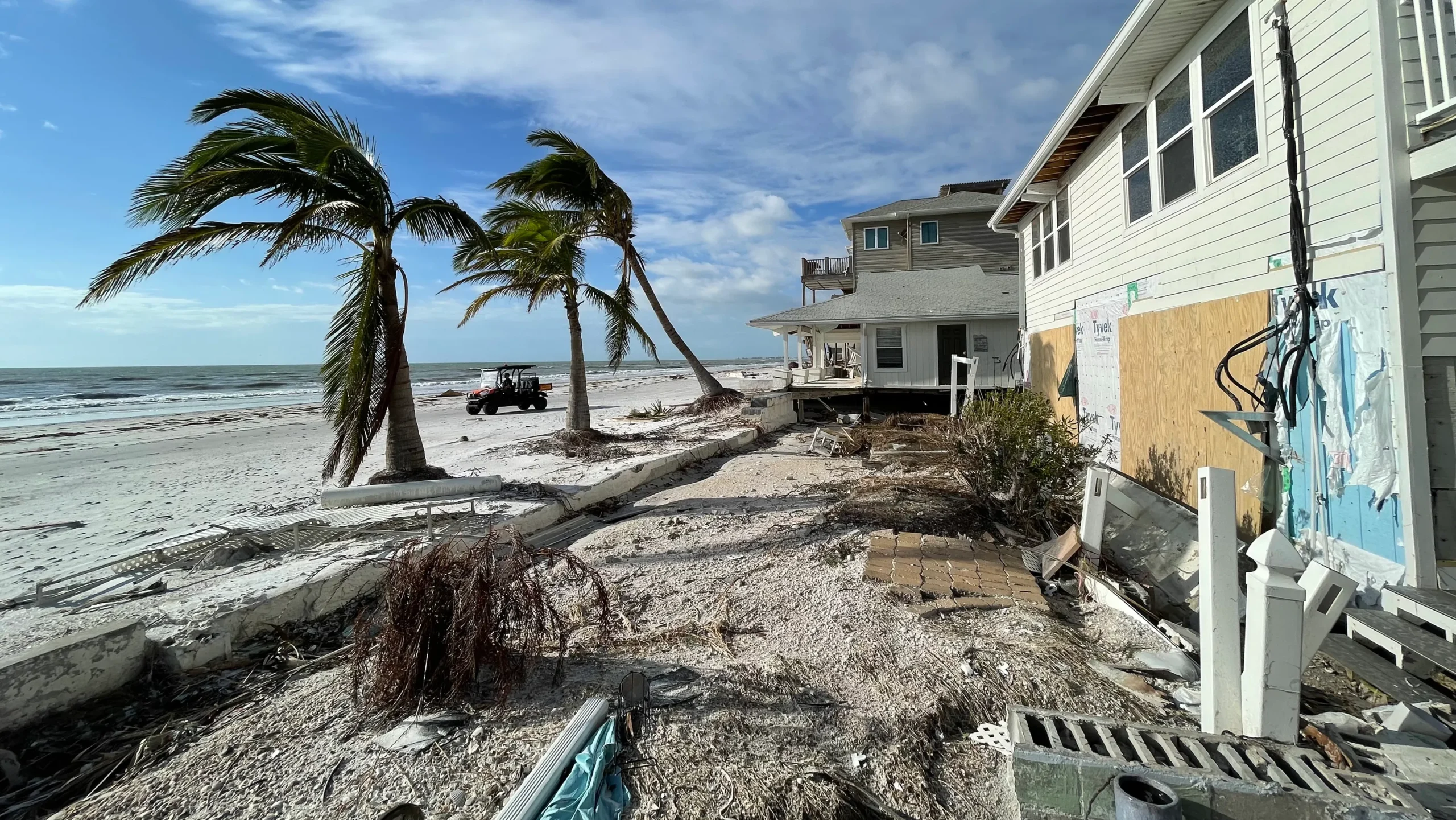
But here’s the uncomfortable reality: on a barrier island repeatedly exposed to hurricanes, newer construction is almost always safer, stronger, and more environmentally resilient than legacy structures built under outdated codes.
Florida’s building codes evolved dramatically after Hurricane Andrew. When the storm exposed widespread construction and enforcement failures, the state adopted a uniform Florida Building Code in 2002 with significantly stronger wind, flood, and structural requirements. Homes built under that code have sustained measurably less damage than older structures in comparable storms.
The most famous example is the so-called “Super House” in Mexico Beach — built to withstand extreme storm surge and catastrophic wind. When Hurricane Michael devastated much of the Panhandle, that reinforced concrete structure remained standing while older homes around it were destroyed. Even homes just on the leeward side of the “super house” were protected and suffered less damage. It became a national symbol of what resilient coastal construction can look like.
Siesta Key does not exist outside the laws of physics. When storms come — and they will — structures built to outdated standards are more vulnerable. Debris from older buildings becomes environmental contamination. Extended recovery slows tourism. Insurance pressures mount. Tax revenue drops.
If Sarasota County is deeply reliant on Siesta Key’s tourism tax revenue — and it is — then resilience is not optional. It is economic policy. Red Tape Florida has previously documented that Siesta Key generates roughly one in four of Sarasota County’s tourist-development tax dollars — revenue that flows largely into countywide spending rather than back to the island itself.
The regulatory framework is already in place: an overlay district, zoning rules, setback standards, short-term rental regulations, residential protections. What’s increasingly visible is a mindset that deploys anti-growth arguments to preserve a nostalgic version of the island, even when that approach conflicts with environmental durability and long-term economic health.
Freezing redevelopment does not freeze risk. It may amplify it.
When officials delay or deny projects that would replace older structures with modern, code-compliant buildings, they are not protecting the environment. They may be prolonging the life of the very structures most vulnerable to catastrophic failure in a major storm.
And when communities that benefit disproportionately from tourism tax revenue resist modernization while continuing to rely on that revenue stream — including for countywide obligations — the optics become harder to defend.
Barrier islands must evolve or they will erode — economically and structurally.
The real debate on Siesta Key shouldn’t be “growth versus no growth.” It should be this: are we encouraging smarter, stronger, storm-resilient redevelopment within existing zoning — or are we preserving aging vulnerability under the banner of nostalgia?
That’s not a culture war question. It’s a resilience question.