By Skip Foster, Red Tape Florida
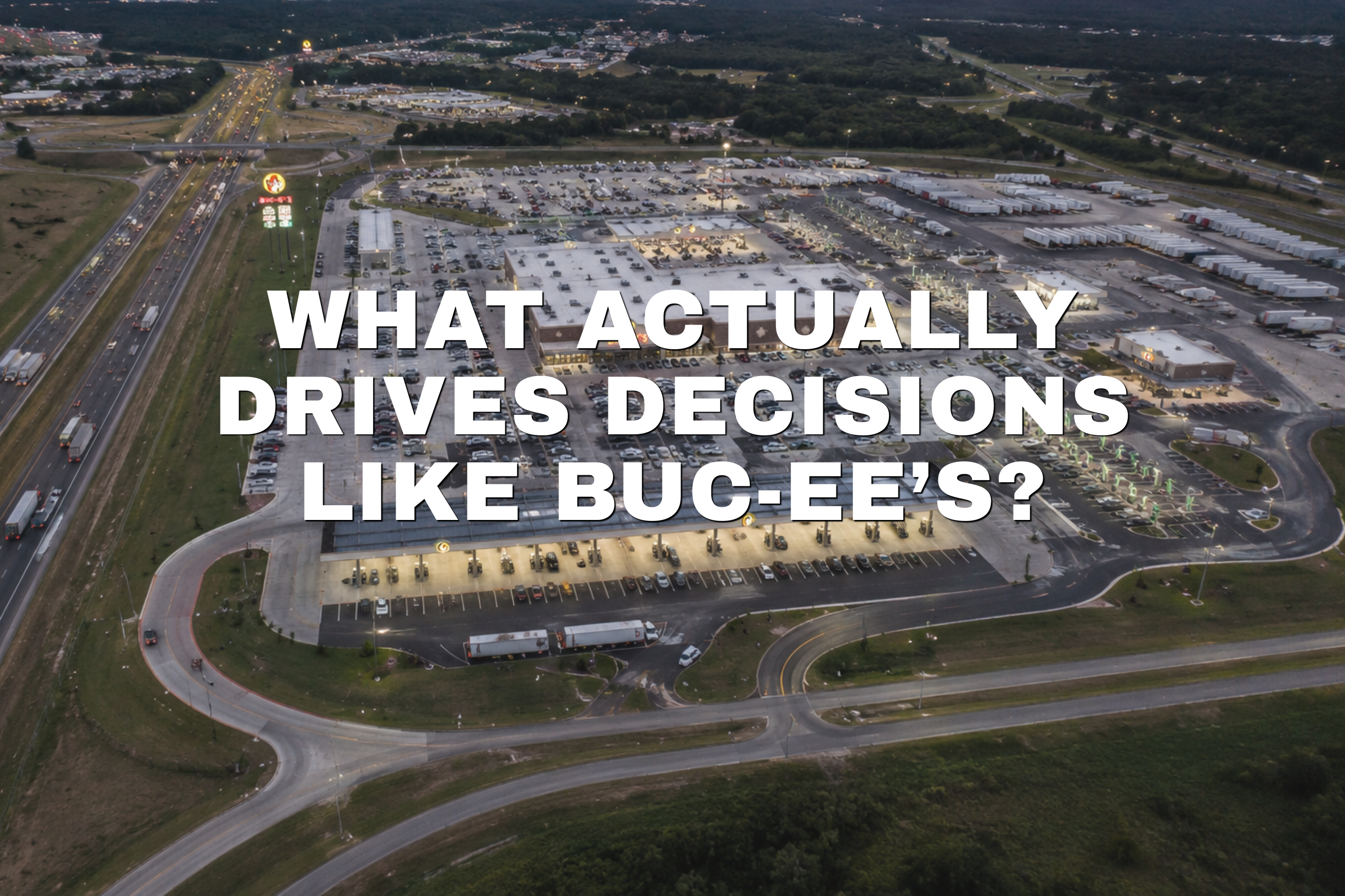
Pam McVety’s recent column raises a thoughtful question: in a world transitioning toward cleaner energy, does a large travel center built around gasoline make sense?
It’s a fair question — and one informed by her background as a scientist and longtime advocate on environmental and public health issues. The concerns she outlines are real, and the broader direction she describes is one most people would agree with: lower emissions, cleaner energy, and more efficient transportation.
But it’s also a question that operates at a level of abstraction that doesn’t reflect how communities — or markets — actually function.
There are at least three different conversations happening here.
- The first is what we would like the world to look like.
- The second is what we believe people should do.
- And the third — the one that ultimately determines whether projects like this get built — is what people are actually doing.
Right now, people are still overwhelmingly driving gasoline-powered vehicles. That is not a political position. It is a market reality.
As long as that remains true, the question is not whether fueling infrastructure exists. It must. The question is what form it takes.
Facilities like this are typically located along major interstate corridors, where demand is already concentrated. That often means fewer detours and more direct trips. The result can be greater efficiency, not less.
Modern travel centers are also not static. Many now include electric vehicle charging alongside traditional fueling. Buc-ee’s locations in multiple states have begun incorporating EV infrastructure, reflecting the same transition Ms. McVety describes.
The broader issue is one of scale.
The energy transition Ms. McVety is advocating for is a macro challenge. It will be driven by technology, policy, pricing, and consumer behavior over time — not by the approval or rejection of individual projects.
That doesn’t make local decisions irrelevant. But it does mean that treating a single project as a proxy for global outcomes can lead to conclusions that don’t hold up.
There is also a more basic question at play — one that sits at the core of how communities should make decisions.
Projects like this are not approved because they align with a particular worldview. They are approved — or rejected — based on whether they meet established rules: zoning, traffic, environmental standards, and applicable state law.
What Ms. McVety is effectively arguing is that even if a project meets those standards, it should be denied because it does not align with a broader policy preference about energy use.
That is a different kind of decision.
And it is one that puts government in the position of picking winners and losers based not on compliance, but on ideology.
And that logic doesn’t stop with gasoline.
If we shouldn’t build infrastructure tied to current consumer behavior because we want that behavior to change, then we wouldn’t build fast-food restaurants because of public health concerns. We wouldn’t build water parks because of water consumption. We wouldn’t build bookstores because of paper use.
That is not how communities function.
We do not prohibit entire categories of activity because they are imperfect. We regulate them, improve them, and over time — as behavior changes — the market shifts with it.
And there are real downstream consequences to getting this wrong.
Leon County Schools is preparing to ask voters to renew a half-penny sales tax for capital needs. Blueprint projects rely on similar revenue streams. When growth is stifled, those funding sources are affected — and so are the roads, schools, and infrastructure they support.
The transition Ms. McVety describes is real. But it is not instantaneous. It is measured in decades, not news cycles. And during that transition, communities still need to function.
That includes providing the infrastructure that supports how people actually live and travel today.
The risk in this debate is not that we will build one too many gas stations.
It is that we will confuse long-term goals with near-term decision-making — and lose sight of the difference between aspiration and reality.
Both matter.
But they are not the same thing.