By Skip Foster, Red Tape Florida
Palm Coast decided last year that growth needed to pay more for growth.
A lot more.
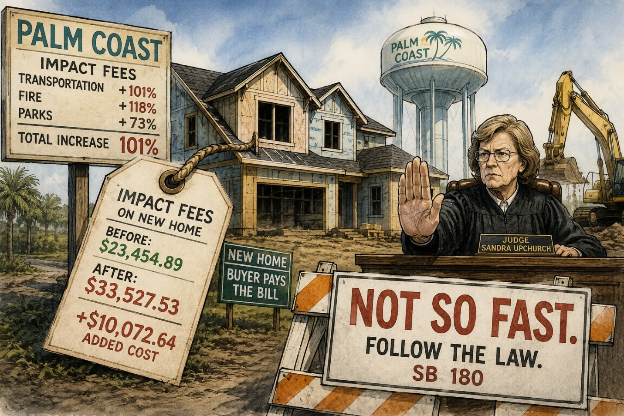
The city approved sweeping increases in transportation, fire and parks impact fees on new development. The three fees combined added about $11,500 to the cost of a new single-family home, according to local reporting. For one actual home analyzed by the Flagler Home Builders Association, total impact fees jumped from $23,454.89 to $33,527.53 — an increase of more than $10,000.
There was just one problem.
A judge says Palm Coast wasn’t allowed to do it.
Circuit Judge Sandra Upchurch last week granted summary judgment to the Flagler Home Builders Association and other plaintiffs challenging the city’s 2025 increases, finding that the higher fees violated Senate Bill 180, the growth-management legislation approved by lawmakers last year.
The ruling doesn’t end the lawsuit, and Palm Coast says the current fees remain in place while the case continues. The city is considering an appeal.
But it’s quite a setback for a city that didn’t exactly nibble around the edges.
Palm Coast’s three impact-fee increases averaged 101%, according to Spectrum News. Fire and transportation fees more than doubled, while parks impact fees increased 73%.
Florida’s Impact Fee Act ordinarily caps increases at 50% and requires increases above 25% to be phased in. Local governments can exceed those limitations only under an “extraordinary circumstances” exception that requires, among other things, a demonstrated-need study, two public workshops and unanimous approval by the governing body.
Palm Coast argued it had extraordinary circumstances.
Rapid population growth and increasingly expensive infrastructure, the city concluded, justified the extraordinary increases. The City Council unanimously approved the new fees in 2025.
The builders weren’t buying it.
They warned city officials before the fees were adopted that they believed the studies supporting the increases contained significant flaws. When that didn’t stop the city, the Flagler Home Builders Association and six other plaintiffs sued on Oct. 1, 2025 — the same day the new fees took effect.
Interestingly, the builders aren’t arguing that impact fees themselves are illegitimate.
“Growth should pay its fair share, and we absolutely support impact fees,” Flagler HBA Executive Officer Annamaria Long said following the ruling. The association’s position, she said, is that government should collect the appropriate amount based on accurate data, through a lawful process and for infrastructure actually necessitated by growth.
That’s an important distinction.
New development obviously creates demand for roads, parks, fire protection and other infrastructure. Impact fees are intended to make new growth contribute toward those costs.
But impact fees don’t materialize out of thin air. They’re part of the cost of producing a home — and ultimately somebody pays them.
In the Flagler HBA’s real-world example, government added more than $10,000 to the cost of producing the exact same house.
That’s a particularly interesting policy choice during a housing-affordability crisis.
And the litigation may get worse for Palm Coast before it gets better.
Upchurch’s ruling addresses the builders’ claim under SB 180. Other portions of the lawsuit challenging how Palm Coast calculated the fees under Florida’s Impact Fee Act remain pending.
For now, Palm Coast says it disagrees with the ruling and is reviewing “all available legal options, including an appeal.”
Fair enough.
But there’s also a simpler lesson here.
Growth may need to pay its fair share.
The government still has to follow the rules when it sends the bill.