
By Skip Foster, Red Tape Florida
Here’s a sentence we did not expect to write: Among the reasons the City of Tallahassee gave for delaying power to a $25 million hotel was the color of a sticker.
Not a missing permit.
Not exposed wiring.
Not anything resembling an actual electrical hazard.
A sticker.
According to members of the development team and the project’s private provider, city officials insisted the black-and-gold address numbers on the meter can be replaced with black-on-white numbers before early power would be approved.
The city’s written inspection comment, however, described the issue differently, stating simply: “Numbers peeling on CT meter.”
Whatever the explanation, the result was the same: a $25 million hotel project waited 25 days — from June 5, the date of the city’s first inspection, to June 30, the date power was finally turned on — for what should have been a routine early-power approval.
First, the hotel waited on the City of Tallahassee building department. Then, the City of Tallahassee utility department.
The Eagles wrote of the Hotel California, “This could be heaven or this could be hell.”
In Tallahassee permitting, it’s definitely hell.
A Routine Request, Treated Like a Hostage Negotiation
“Early power” is about as exotic as a parking permit. It’s the standard, garden-variety step that lets contractors install elevators and finish electrical work before the building earns its certificate of occupancy. Every hotel gets it. Every office tower gets it.
Somehow, at the $25 million hotel rising at Summit East, it became a 25-day siege.
Al Wilson is the private provider hired to inspect the project under Florida Statute 553.791 — not the city, not a city contractor, but an independent, state-licensed inspector retained directly by the project.
Wilson says the city’s inspector failed the project’s early-power inspection over a short list of items.
Let’s take them one at a time.
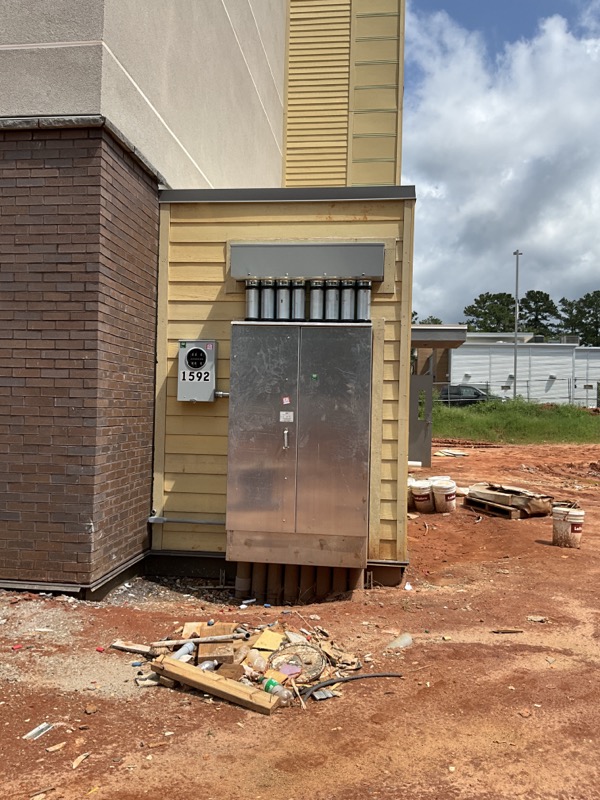
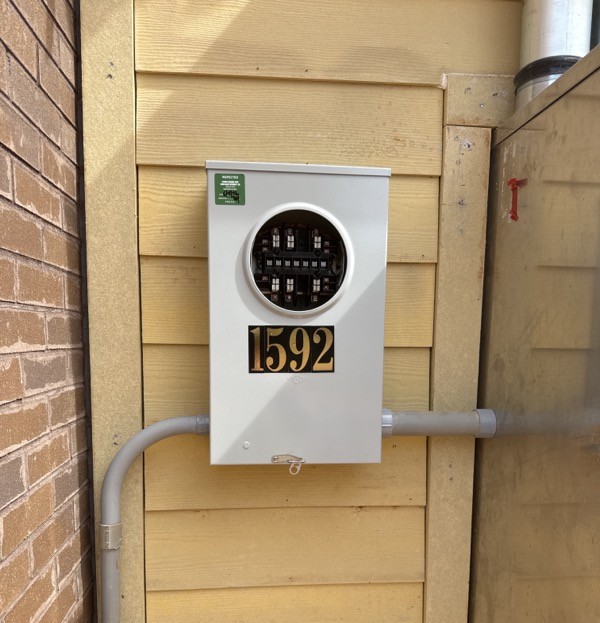
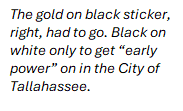
Exhibit A: The Sticker
We already gave away the ending on this one.
The color of address stickers is apparently very important to Tallahassee inspectors.
In his response, City of Tallahassee Building Official Glenn Dodson noted that the city requires an address to be posted on a building before permanent power is connected, “in case of an emergency,” and that the temporary address posting was, in fact, one of the items corrected before power was ultimately approved.
He did not, however, address the specific complaint at issue here — that the dispute was over the color of the numbers on the meter can, not whether an address was posted at all.
Wilson says that gap is the point: a general, undisputed safety rule about address visibility doesn’t explain why a specific color preference for the numbers held up early power.
A project that will eventually employ dozens of people and add badly needed hotel rooms to a market starved for them was delayed—at least in part—over address numbers on a meter can.
This isn’t caution. It’s a complete loss of proportion between the size of the problem and the size of the response.
Exhibit B: The Loose Wires That Weren’t the Contractor’s to Lose
Loose wires in the “CT can” drew a citation.
Wilson inspected them and found the wires sufficiently tight and within industry standards.
Observers at the job site say city officials repeatedly pulled on the wires in an effort to demonstrate movement.
The city offers a more dramatic account. Dodson told Red Tape Florida that loose lugs in the main electrical cabinet were found on three separate site visits — not one — including one attempt where the conductors had not even been run to the building yet.
“The loose connections of the wires in the main cabinet and the main disconnect could potentially cause an electrical arc that could harm workers and cause a fire,” Dodson wrote.
Wilson says city officials were observed pulling on the wires with full body weight.
Of note, Wilson is an International Code Council (ICC) “master code professional” and has “every certification there is,” as he puts it. There is no one on the city’s staff that can match Wilson’s credentials.
Exhibit C: Panic Hardware, Several Inspections Early
Missing panic hardware on the electrical room door also made the list.
Except panic hardware isn’t required until final inspection. Remember, this was an early-power inspection.
Dodson disputes that timeline. He says the code requirement isn’t tied to final inspection at all, but to whether the room is energized. “The panic hardware is required on an electric room when there is a large electrical service, and this type of door latch should be in place when the electrical system is energized for the safety of the workers that may be in that room in case of an emergency,” Dodson wrote — meaning, in the city’s reading, the requirement attaches at early power, not final inspection.
Wilson maintains that’s not how the requirement has been enforced on comparable projects, and that the city is applying a final-inspection standard at the early-power stage — selectively, in his view, and not as a matter of routine practice.
This is the bureaucratic equivalent of pulling someone over because their registration expires three months from now.
Exhibit D: The Locked Door
The electrical room was locked, so the inspector couldn’t access the disconnect.
Never mind that the room contained thousands of dollars in electrical equipment on an active construction site. Never mind that the construction superintendent had no idea anyone was coming.
Nobody called ahead. Nobody asked for access. The inspector arrived, found a locked electrical room on a construction site, failed the item and left.
Dodson said it was a safety issue.
A Bigger Dispute Than Stickers
Wilson’s broader complaint isn’t really about stickers or panic hardware. It’s about authority.
Florida created the private provider program so qualified, state-licensed inspectors could perform building inspections in place of local building departments. Wilson argues Tallahassee is defeating the Legislature’s intent by conducting many of the same inspections anyway simply because it owns the electric utility.
“I am not the electrical contractor,” Wilson told Red Tape Florida. “I am the private provider hired to inspect the project, yet the city insists that they must inspect the electrical system because they own the utility.”
As Wilson sees it, that’s exactly what Florida’s private provider law was designed to prevent. He also rejects any suggestion that the city cares more about safety than he does. “I have millions of dollars in professional liability insurance, while they enjoy sovereign immunity.”
The city points to a carve-out in Florida Statute 553.791(9) it says allowed the visits as verification rather than duplicate inspection. Wilson calls that a distinction without a difference — four site visits that each had the power to hold up the project looks more like reinspection than verification, whatever you call it.
The Legislature apparently agreed. HB 803, signed by Gov. DeSantis on May 6 and effective July 1, now requires actual written notice and substantiated cause before a local official can revisit work a private provider already cleared. The law had been on the books for nearly two months when these inspections happened. Dodson chose to run out the clock on the old rules anyway. Why wait until the law makes you do the right thing?
This Is Not A Private Provider’s First Rodeo
Red Tape Florida has previously documented complaints from private providers and contractors who believe they face a far more difficult path through City Hall than others.
This project appears to fit that pattern. Routine requests become prolonged negotiations. Inspection items appear before they’re due. Minor issues become major obstacles.
And the clock keeps ticking.
The Real Cost of a Permanent Hotel Shortage
It’s easy to dismiss a 25-day permitting delay as somebody else’s problem.
It isn’t.
Tallahassee has struggled for years with an undersupply of hotel rooms. Anyone who has tried to book a room during an FSU football weekend, graduation or the legislative session already knows what happens.
Prices don’t just rise. They spike. That’s what happens when demand is predictable and supply never quite catches up.
A new, large-scale hotel is exactly the kind of project that helps relieve that pressure.
This 25-day delay postponed bringing additional hotel rooms online in a market that desperately needs them.
More importantly, time is money. Every day a project sits idle costs someone money. Construction schedules slip. Trades get pushed back. Financing costs continue. Opening dates move farther into the future.
That’s not just a developer problem. It’s a visitor problem. It’s a tourism problem. It’s an economic development problem.
‘But, It’s Just 25 Days, Right?’
Think about the big picture.
Twenty-five days on one project may not be earth-shattering. But what about 25 days on 100 projects? Or 1,000? Now we are talking about a cumulative effect of years of delays.
And what about the reputational hit? Red Tape Florida has had numerous builders from all across the state – and other states – say that Tallahassee is the most business-unfriendly city in Florida.
Even in just this case, while it doesn’t sound like much, every idle day costs money — slipped schedules, pushed trades, financing that keeps running whether the elevator moves or not. Opening dates don’t just delay. They compound.
Finally, on Friday, June 26, the Building Department cleared early power. The private provider was present. The green sticker was applied. That battle, at least, was over.
Then the City of Tallahassee Utilities showed up.
Act Two: The Utility Department Has Its Own Ideas
The Building Department is one arm of the city. The Utilities Department is another. And after 21 days of fighting the Building Department over stickers, loose wires, panic hardware, and locked doors, the project team discovered that clearing the Building Department was not the same thing as getting the power turned on.
COT Utilities had a condition of its own: the UL-certified locks on the electrical cabinets had to be drilled out before the city would energize the building.
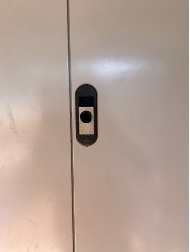
The reason, according to Wilson, was stated plainly: “We’re not cutting on power until you drill these locks out. If you don’t pay your bill, we’ve got to be able to cut your power off.”
The locks were drilled out. The cabinets — the kind that sometimes carry OSHA-required locking hardware — were opened on demand so the city could guarantee access to a building that hadn’t received its first utility bill yet, for a business that hadn’t served its first guest.
This was not a safety requirement. It was a revenue-protection demand — enforced as a condition of service, on day one, before a single dollar had been billed or missed.
Power was finally turned on June 30 — 25 days after the city’s first inspection on June 5.
The elevators could finally be installed.
The project could finally move forward.
But the larger question remains.
If this is how Tallahassee handles a $25 million investment that will create jobs, generate tax revenue and help ease one of the city’s most persistent hotel shortages, what message does that send to the next developer deciding where to invest?
That’s a question worth far more than the color of a sticker.