
By Skip Foster, Red Tape Florida
HUD just ordered Tallahassee to repay federal money. The findings are much worse than the public was led to believe.
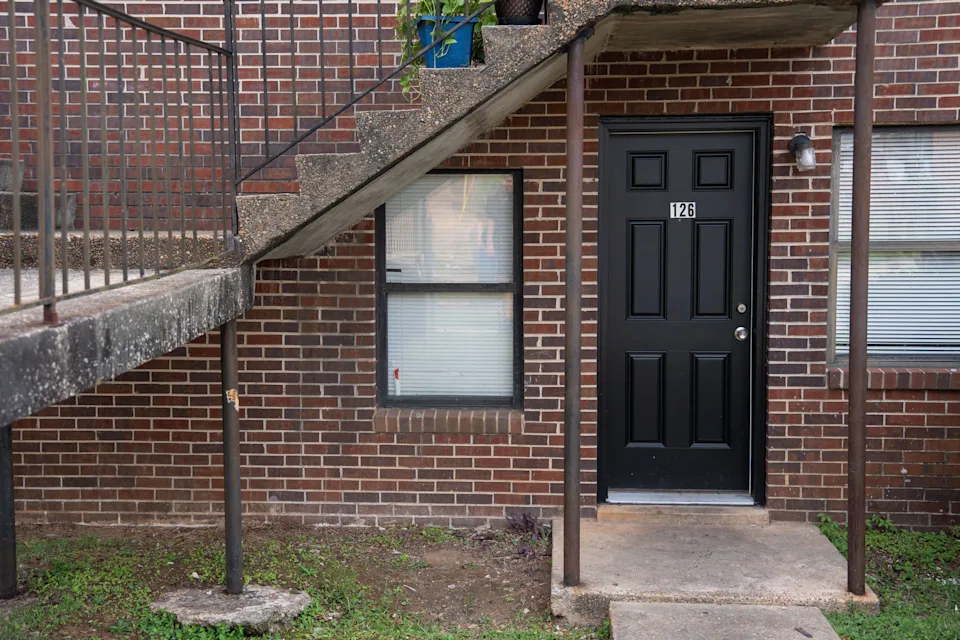
For weeks, Tallahassee residents have heard about an $8,450 door at the Holton Street Apartments.
The figure became a symbol of government waste, sparked a political firestorm, and generated days of headlines. Along the way, many residents were left with the impression that the controversy centered on a questionable contractor invoice, an unusually expensive repair, or perhaps a paperwork dispute that had gotten out of hand.
That is not what HUD found.
Last week, the U.S. Department of Housing and Urban Development ordered the City of Tallahassee to reimburse all federal funds associated with the Holton Street project. After reading the agency’s findings, it becomes clear that the federal government was examining something much larger than a door. HUD was trying to determine whether the City could demonstrate compliance with the most basic requirements of the grant itself.
At the May 13 City Commission meeting, Commissioner Curtis Richardson described accusations related to the matter as “unfounded.” Commissioner Dianne Williams-Cox urged caution and noted that residents had benefited from lead-removal efforts. Mayor John Dailey warned that certain allegations could expose individuals to legal liability.
HUD was not evaluating political accusations. It was evaluating compliance. And after months of review, repeated requests for records and examination of the City’s responses, HUD concluded that it could not verify that fundamental requirements of the grant had been satisfied.
One of the first lessons children learn in school is that getting the right answer is only part of the assignment. You also have to show your work. HUD’s letter reads like a federal agency that repeatedly asked the City to show its work and concluded that the documentation simply wasn’t there.
The project was funded through a federal lead-hazard reduction grant designed primarily to protect children under six from lead exposure. Yet HUD concluded that the City “did not sufficiently demonstrate compliance with these core program requirements and objectives.” It found that the City could not adequately demonstrate that housing units containing children under six were consistently prioritized, even though protecting those children is the central purpose of the program.
HUD also found:
- Records did not support that all firms and workers involved in the project possessed the certifications required to perform federally funded lead-hazard work.
- It could not verify tenant eligibility.
- It could not verify procurement decisions.
- It could not verify that costs charged to the grant were reasonable.
- It could not verify that turnover work had been separately procured or competitively evaluated.
Much of the public debate focused on the now-famous $8,450 doors. The assumption was that the controversy revolved around price: were taxpayers getting a reasonable deal or not?
HUD’s concern was different. The agency noted that lead-hazard reduction methods are supposed to be selected based on lead inspections, risk assessments and healthy homes evaluations. Yet HUD found that the City had not provided sufficient documentation demonstrating that the replacement activities were selected in accordance with those requirements. In one of the most striking passages in the letter, HUD wrote that it was “unable to verify that these standards were met for all (or any) of the door replacement activities conducted under the project.”
The public was debating the price of the doors while HUD was asking for the paperwork. The issue is not whether a door should have cost $8,450. The issue is whether the City can show that the work was selected, approved and documented in the manner required by the federal program that paid for it.
The questions facing City Hall are now much larger than the price of a door. Was this actually the lead-hazard reduction program HUD thought it was funding? How did a federal grant intended to protect children from lead exposure become associated with a project that HUD says it cannot verify met core program objectives? What did commissioners know about contractor qualifications, procurement options and project scope when approvals were sought? And if HUD now says it cannot verify eligibility, necessity, procurement and certifications, what exactly did taxpayers pay for?
The City of Tallahassee’s Housing and Community Resilience Department employs 42 people and oversees housing programs, community development initiatives, resilience efforts, neighborhood services and federal grants. Yet when HUD examined one project, the agency repeatedly reached the same conclusion: it could not verify that key requirements had been met.
That should concern taxpayers regardless of their political views. The purpose of a bureaucracy is not simply to spend money. The purpose of a bureaucracy is to create accountability. Citizens accept forms, procedures, compliance reviews, procurement rules, reporting requirements, certifications and oversight mechanisms because those systems are supposed to demonstrate that public dollars were spent properly.
When the agency providing the money concludes that it cannot verify whether those requirements were satisfied, the conversation is no longer about a door. It becomes a question of competence.
The door got the headlines.
The findings are the real story.