Opinion by Skip Foster, Red Tape Florida
At Tiger Bay a few weeks ago, I talked about what I believe drives successful communities.
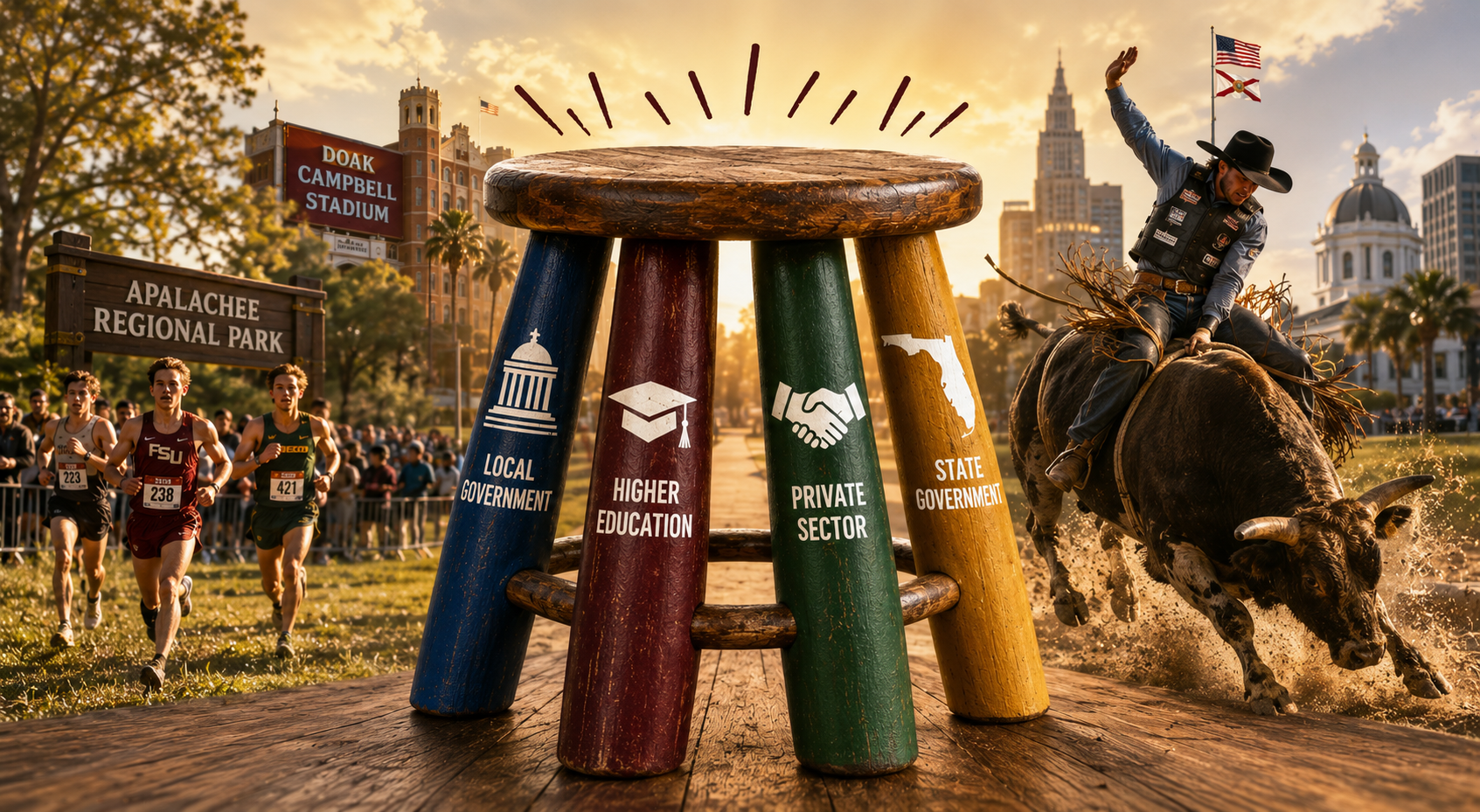
Economic development isn’t the responsibility of one organization. It’s a four-legged stool.
One leg is local government. One is higher education. One is the private sector. One is state government.
When all four are working together, communities grow.
If you’ve read Red Tape Florida for any length of time, you know we have spent a lot of our energy documenting the opposite. We write about bureaucratic delays, unnecessary regulations, missed opportunities and government policies that make it harder for businesses to invest and create jobs.
That’s not changing.
But criticism without praise is a one-note song.
Here is an example of our community getting it right. The topic? Sports and entertainment tourism.
The story starts in Oregon
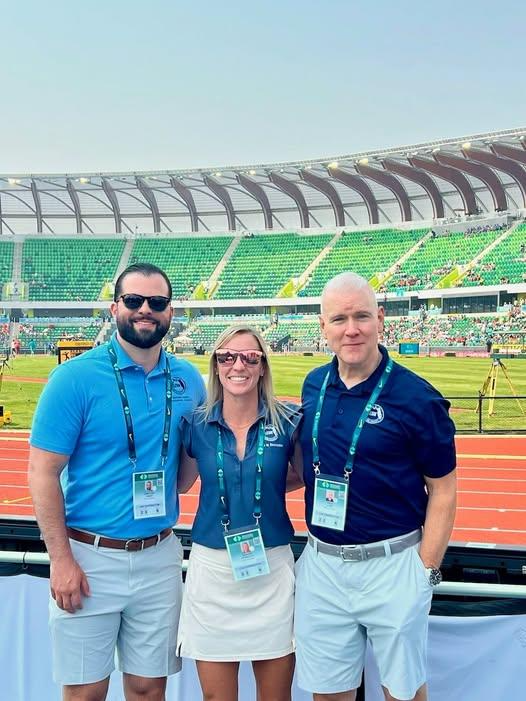
While most people weren’t paying attention, Leon County Commission Chairman Christian Caban and County Administrator Vince Long were recently in Eugene, Oregon, making the case for Tallahassee to host the 2029 World Athletics Cross Country Championships. They weren’t just attending a conference.
They were selling Tallahassee to the world based on the success of this year’s championship at Apalachee Regional Park.
While most people weren’t paying attention, Leon County Commission Chairman Christian Caban and County Administrator Vince Long were recently in Eugene, Oregon, making the case for Tallahassee to host the 2029 World Athletics Cross Country Championships.
They weren’t just attending a conference. They were selling Tallahassee to the world based on the success of this year’s championship at Apalachee Regional Park.
That effort didn’t begin with a plane ticket.
It began more than a decade ago when Leon County made the long-term decision to invest in Apalachee Regional Park as a destination for cross-country competition. Since then, the park has hosted dozens of national, regional and state championships, attracting thousands of athletes and visitors and generating millions of dollars in spending for local businesses. The World Championships weren’t a lucky break. They were the payoff from years of consistent investment.
And that investment is beginning to compound.
The World Athletics Cross Country Championships drew more than 10,000 spectators to Tallahassee, including thousands of visitors from outside Leon County, providing another tangible example of how destination events can fill hotel rooms, restaurants and local businesses.
County leaders aren’t treating that success as a one-off. This summer, they proposed a new performance-based tourism incentive program aimed at attracting even larger events, while simultaneously traveling to Oregon to make the case for bringing the 2029 World Athletics Championships back to Apalachee Regional Park. That’s what strategic economic development looks like. It’s not chasing the next headline. It’s building on success, reinvesting in it and creating a pipeline of opportunities that can pay dividends for years to come.
That’s the first leg of the stool.
The second is our area’s colleges and universities.
Bulls and Bananas
For years, Doak Campbell Stadium was essentially a twelve-day-a-year asset. Athletic Director Michael Alford deserves credit for changing that mindset. The Savannah Bananas filled the stadium. Professional Bull Riders brought thousands more visitors. Concerts followed. Instead of sitting empty most of the year, one of Tallahassee’s largest public assets is becoming an economic engine that benefits the entire community.
The success of those events isn’t going unnoticed.
At the close of last month’s Leon County Commission meeting, Chairman Christian Caban announced plans to bring forward a formal agenda item aimed at creating a more intentional strategy for sports and entertainment tourism. His vision is straightforward: use Tallahassee’s major public venues to attract destination events during traditionally slower tourism periods, bringing visitors here when hotel occupancy and economic activity would otherwise lag.
That’s exactly the kind of long-term thinking communities need. Successful tourism isn’t about landing one headline event. It’s about creating a year-round pipeline of attractions that maximize facilities taxpayers have already paid to build.
The third leg is the private sector.
Chamber checks in
The Greater Tallahassee Chamber of Commerce publicly backed the County’s effort this week, recognizing what local businesses already know: visitors don’t just attend sporting events. They stay in hotels, eat in restaurants, shop in local stores and support local jobs. Several businesses have already reported significant increases in sales during these major events.
The fourth leg is the State of Florida.
Foundational
The Florida Sports Foundation doesn’t build facilities or operate hotels. But it helps communities compete for major sporting events that might otherwise go to Orlando, Tampa or Miami. That statewide support gives communities like Tallahassee a chance to compete on a much larger stage.
None of these organizations could have accomplished this alone.
The County could build a world-class course, but without FSU embracing year-round use of its facilities, the community’s overall sports tourism strategy would be weaker.
The Chamber could promote Tallahassee all day long, but without venues and events, there would be nothing to sell.
The state can help market destinations, but it can’t manufacture local leadership.
It takes all four.
Too often in Tallahassee, these institutions operate in their own lanes. Sometimes they’re indifferent to one another. Occasionally they’re working at cross purposes. When that happens, economic opportunities are lost before they ever reach the starting line.
This is different.
It’s a reminder that economic development isn’t just about recruiting the next manufacturer or announcing another ribbon-cutting. Sometimes it’s about recognizing the assets you already have, investing in them over time and getting multiple institutions rowing in the same direction.
I’ve spent plenty of time pointing out where Tallahassee falls short.
It’s only fair to point out when it gets something right.
The real opportunity isn’t simply bringing another world championship to Apalachee Regional Park.
It’s asking a bigger question:
What if we approached our other economic priorities the same way?
What if the same level of collaboration were applied to expanding air service at Tallahassee International Airport? What if local government, the business community, Florida State and state leaders all treated that as a shared priority instead of someone else’s responsibility?
What if we brought that same alignment to recruiting major employers? To commercializing the incredible research taking place at Florida State and the National High Magnetic Field Laboratory? To creating more startup companies that grow here instead of leaving here?
Those are the kinds of challenges no single organization can solve.
The County can’t do it alone.
Neither can the City.
Neither can FSU.
Neither can the Chamber.
Neither can the state.
But together? That’s a different conversation.
That’s why this story is about much more than cross-country championships, Banana Ball or bull riding.
Those are simply proof of concept.
They’re evidence that when Tallahassee’s four legs of the stool — local government, higher education, the private sector and state government — decide to pull in the same direction, this community can compete with cities much larger than our own.
Imagine what could happen if we made that the rule instead of the exception.