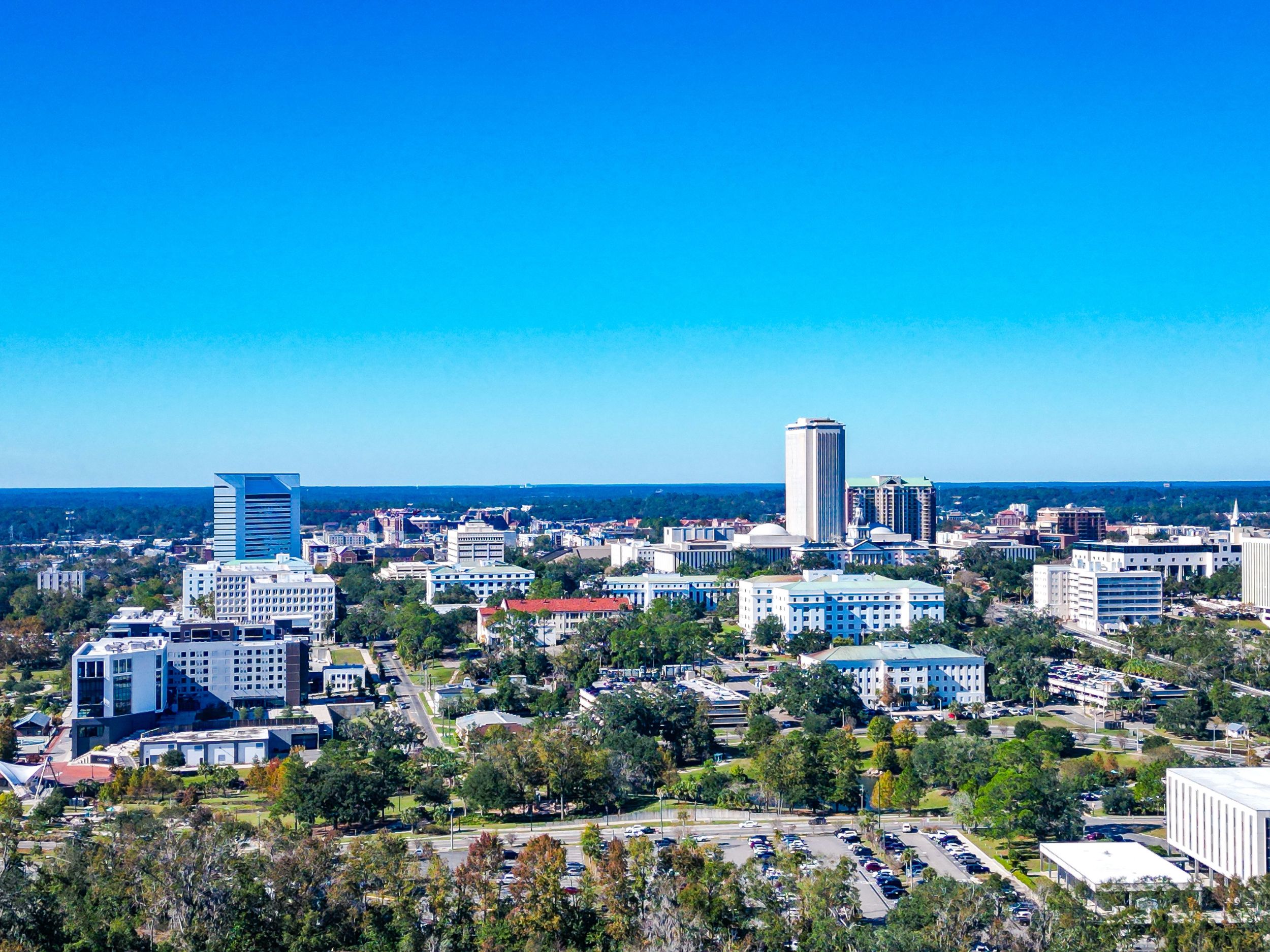
In a May 29 Tallahassee Democrat op-ed, a local resident laments Tallahassee’s new growth plan, wringing hands over trees, neighborhood “character,” and supposed flows in a new Comprehensive Plan. But strip away the foliage and euphemisms, and what’s left is a familiar chorus: “I’m not against all growth—just this growth.”
We’ve heard this tune before, and it’s getting old.
Let’s call this what it is: the Smart Growth Shuffle. It’s performed by people who claim they hate sprawl, but also oppose urban infill. Who say they support affordable housing—just not here. Who support more density—just not next door. What they really support is nothing at all changing within their line of sight.
It’s time to make these folks own their true belief: They don’t want any growth at all.
This new comp plan, which encourages development within already built environments and reduces bureaucratic red tape, is the very definition of “smart growth.” It promotes infill, encourages mixed uses, and supports a more sustainable and efficient pattern of development. And yet, it’s being opposed by the very people who claim to support those principles.
So which is it? Do you want growth that is denser and more environmentally conscious, or do you want to keep the city frozen in amber? Because you can’t have it both ways.
Spoiler alert: this is not about trees. This is NIMBYism with a nice haircut and a compost bin.
Meanwhile, the consequences of this “keep it just the way it is” mentality are already playing out. Leon County has actually lost population in recent years.
That might be fine if you’re protecting some sleepy mountain town. But this is Florida’s capital, home to two major universities, a state college and a regional economy. Growth should be a feature, not a bug. And when people can’t find housing—because the same people shouting “no sprawl!” are also saying “no apartments!”—they look elsewhere.
The result? A shrinking tax base, fewer young professionals, and more pressure on existing services. Over time, that erodes opportunity and leads to exactly the things people say they want to avoid: poverty, inequality, and crime.
And those trends are already visible. Leon County’s poverty rate sits at 17.6%, well above the Florida average of 12.3% (U.S. Census). Its violent crime rate is 34.3, compared to a national average of 22.7 (Best Places). That’s not just an economic concern—it’s a quality of life concern.
Want to improve public safety? Build stronger neighborhoods. Want to reduce poverty? Attract employers and workers with housing options they can afford. That starts with embracing policies that allow our city to grow responsibly.
This plan does that. It’s not perfect—no plan ever is—but it represents a good-faith effort to address Tallahassee’s growth challenges. It streamlines overly restrictive policies, encourages development near existing infrastructure, and lays the groundwork for more housing choices across the economic spectrum.
The people standing in the way of this plan aren’t trying to “protect” Tallahassee. They’re trying to preserve a narrow slice of it, usually one that benefits them. And they’re doing it at the expense of younger families, renters, students, and workers who are just looking for a place to call home.
If we let that mindset dominate, Tallahassee won’t stay the same—it will slowly decline. That’s the real threat to our community character.
Let’s stop mistaking obstructionism for wisdom. It’s time to grow—smartly, sustainably, and unapologetically.