By Skip Foster, Red Tape Florida
Three construction estimates are supposed to give taxpayers some confidence they’re getting a competitive price.
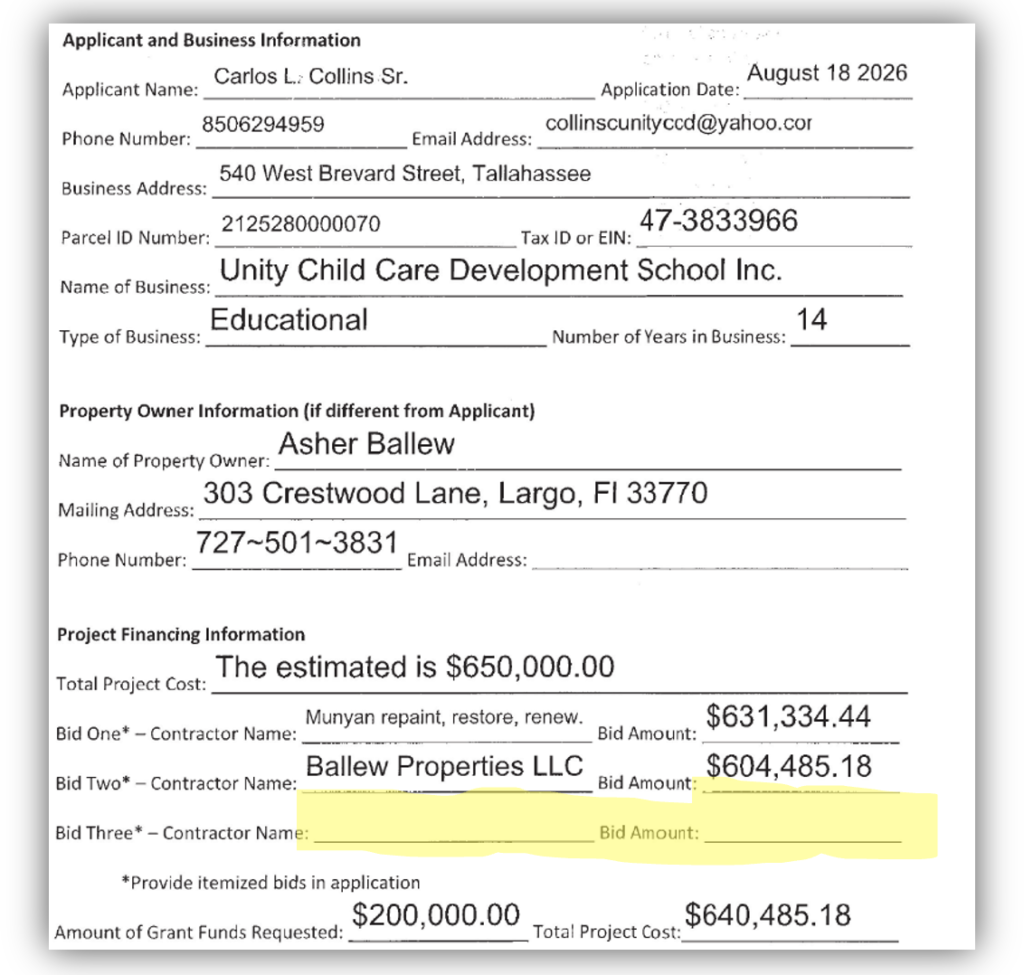
The application for a $200,000 Tallahassee Community Redevelopment Agency grant at 540 W. Brevard Street has two bids listed on the application.
The space for Bid Three is blank.
But deeper in the supporting documents, there is a third estimate.
And that’s where this gets interesting.
One of the first two bids came from the company that owns the building.
The other came from a company where the building owner’s president works.
And that third estimate?
Somebody apparently had a calculator.
The project
The CRA is considering a $200,000 grant to help Unity Child Care Development Schools convert the former retail building at 540 W. Brevard Street into a private K-8 school.
The building is owned by Ballew Properties LLC, which bought the property for $550,000 in March 2025.
The renovation is expected to cost more than $600,000, with taxpayers picking up $200,000 of the tab.
Now, about those estimates.
Bid No. 1: The landlord
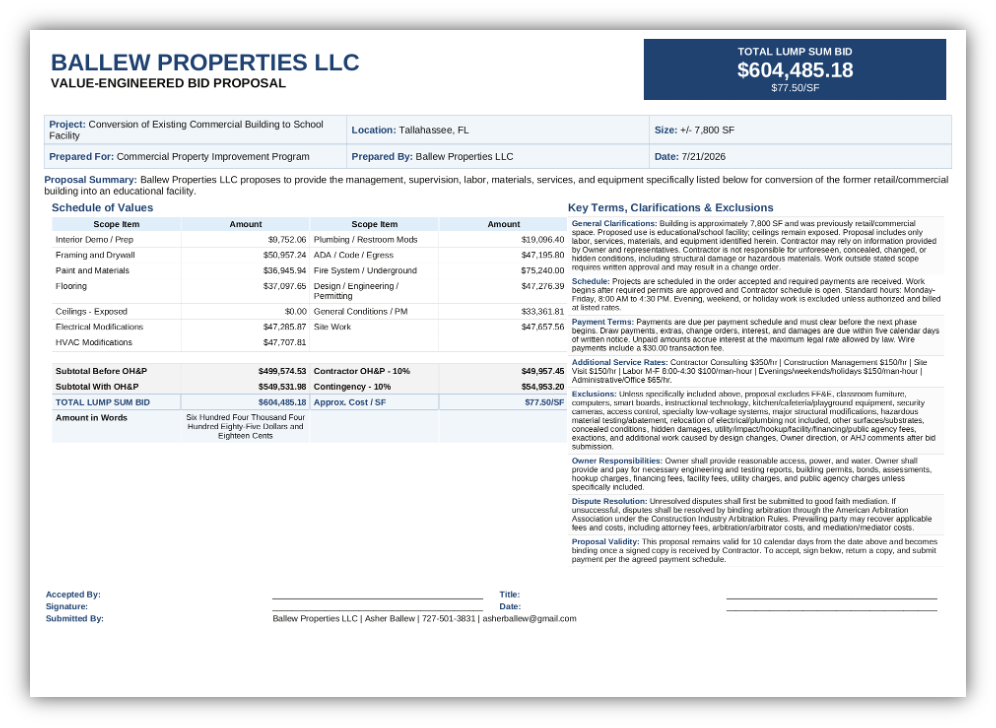
The lowest estimate — $604,485.18 — came from Ballew Properties itself.
In other words, the company that owns the building also submitted the low bid to perform the improvements to its own property.
Bid No. 2: Not exactly a stranger
The other bid listed on the application — $631,334.44 — came from Munyan, a Largo-based painting, roofing and restoration company.
At least that one came from somebody else.
Well, not really.
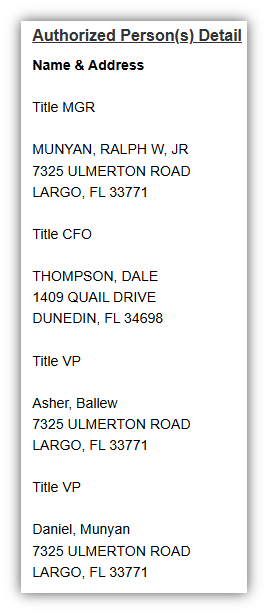
Asher Ballew, president of Ballew Properties, is identified on Munyan’s own website as a sales/project manager for the company.
Florida corporate records also list Ballew as a vice president of Munyan Residential Painting Services LLC, an affiliated Munyan business operating from the same 7325 Ulmerton Road headquarters in Largo.
The Munyan proposal in the CRA packet uses that same 7325 Ulmerton Road address.
And there’s another problem with it.
The proposal is dated May 29, 2026, and says it remains valid for only 10 calendar days.
That put its expiration in early June.
Unity’s application is dated Aug. 18 — more than two months later.
And then there’s Bid No. 3
Remember that blank space on the application?
The supporting documents include another estimate, this one for $617,909.81.
That’s between the Ballew and Munyan numbers.
Actually, it’s exactly between them.
Ballew Properties: $604,485.18.
Munyan: $631,334.44.
Average: $617,909.81.
And there’s no need to take Red Tape Florida’s word for it.
The document says it itself:
“Pricing basis: midpoint of supplied project totals $604,485.18 and $631,334.44 = $617,909.81.”
So, the third estimate wasn’t independently priced. Its total was calculated by averaging the first two.

But keep reading.
The document says the pricing was “based on the two supplied project bids and assembled for Boothe Construction review.”
It says the scope, quantities, pricing, terms, payment schedule, exclusions, schedule and acceptance were still “subject to Boothe Construction review and approval before issuance.”
And at the bottom:
“Prepared for Boothe Construction review; not issued until approved and authorized by Boothe Construction.”
In other words, the third estimate in the supporting documents wasn’t just derived from the first two.
The document itself indicates that it had not yet been approved and authorized for issuance by Boothe Construction.
So, you might be asking, it’s not possible that there is a connection between Ballew and Boothe, is there?
Well, Red Tape Florida couldn’t find one until we went to the Boothe web site and saw this client testimonial.

We have a call into Boothe to see if “Asher B.” is, indeed, Asher Ballew.
CRA requirements
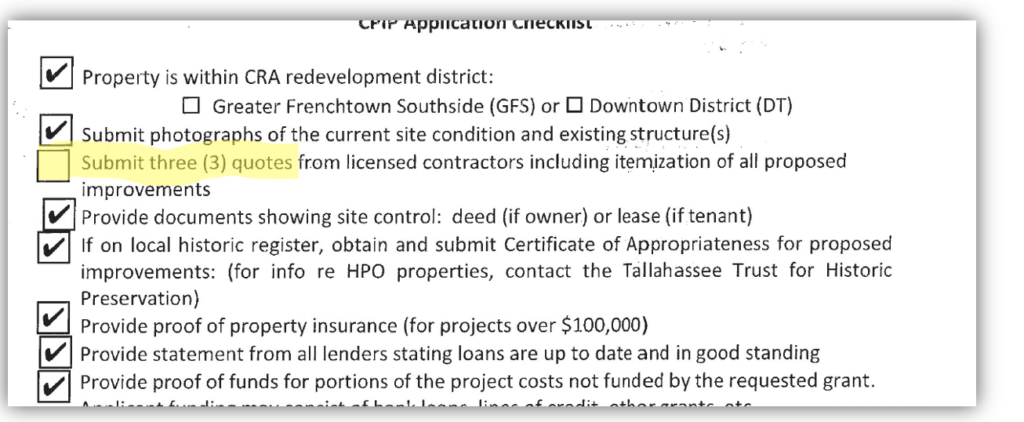
The CRA’s Commercial Property Improvement Program checklist calls for applicants to submit “three (3) quotes from licensed contractors including itemization of all proposed improvements.”
Interestingly, on Unity’s application checklist, that requirement is not checked off — while numerous requirements immediately above and below it are.
Nevertheless, CRA staff is recommending approval of the full $200,000 grant.
What the heck is the CRA doing?
How did this application get a recommendation for approval in the first place?
Red Tape Florida found all of this through a basic review of the documents the CRA itself provided and a few simple searches of public records.
The application lists only two bids. Bid Three is blank.
The CRA’s own checklist calls for three quotes from licensed contractors. That box isn’t checked.
One bid came from the company that owns the property.
The other came from a company where the property owner’s president works. That proposal had also expired more than two months before the application was submitted.
And the document apparently being used as the third estimate says right on it that the price was calculated from the first two bids and that it had not yet been approved and authorized for issuance by the contractor whose name appears on it.
None of this was particularly difficult to find.
Yet CRA staff reviewed this application and is recommending that taxpayers put $200,000 into the project.
And let’s remember who’s running this operation.
Just six weeks ago, the CRA board approved a $45,707 raise for Executive Director Stephen Cox, bringing his annual salary to $165,000. Mayor John Dailey defended the increase, saying Cox’s position was “woefully underfunded.”
For that kind of money, taxpayers ought to expect something more than a rubber stamp on a $200,000 grant application.
So, what exactly did that review involve?
Did anyone ask why the property owner was bidding on improvements to its own building?
Did anyone check the relationship between the property owner and the second bidder?
Did anyone notice that bid had expired?
Did anyone ask why there was no third bid listed on the application?
Did anyone contact Boothe Construction to determine whether it had actually approved and authorized the document bearing its name?
And, perhaps most importantly, did anyone at the CRA determine whether these documents actually satisfy the program’s requirement for three quotes from licensed contractors?
Because if Red Tape Florida could uncover all of this with the CRA’s own documents and a few basic public-record searches, it’s fair to ask: Why didn’t the people recommending spending $200,000 of taxpayer money do the same thing?