By Red Tape Florida staff
Florida has no shortage of end-of-year scorecards, watchdog lists, and awards nobody campaigns for. The Red Tide Awards proudly join that tradition — with a saltwater twist.
Each year, Red Tape Florida documents how routine rules and procedures quietly metastasize into delay, dysfunction, and missed opportunity. The Red Tide Awards are our annual attempt to step back and call out the worst of it — not as gotchas, but as case studies in what happens when the process goes unchecked.
Think of these less as honors and more as field reports. When red tape behaves like an actual red tide — spreading slowly, feeding on inaction, and choking off progress — we mark the bloom.
Every entry below earns its place with one thing Florida government reliably produces: evidence. Each Red Tide citation is anchored by a specific, verifiable fact that made the damage impossible to ignore. A few blooms were contained. Most were not.
Grand Red Tide Award of 2025
North Florida Fair luxury watch scandal
In 2025, Red Tape Florida uncovered that a nonprofit closely intertwined with Tallahassee’s public economic development efforts approved profit-sharing payouts and a $25,000 signing bonus for an executive — all while operating with substantial public funding, public responsibilities, and limited public scrutiny. The North Florida Fair became the talk of the town — and Leon County Commissioners — after the story broke.
Compensation alone was not the scandal. The defining fact was how easily private-sector incentive structures coexisted with a public-facing mission, absent clear policy, transparent justification, or meaningful oversight. The money moved cleanly. The accountability did not.
This was red tide at full visibility. Documents surfaced. Emails raised questions. Lines blurred. And the more the arrangement was examined, the harder it became to determine where public stewardship ended, and private discretion began. If the Red Tide Awards are meant to capture the moment when red tape stops being abstract and becomes undeniable, this was it — a bloom that combined opacity, incentives, and public dollars in a way readers immediately understood as wrong.
Worst Systemic Red Tide Bloom of 2025
Florida local governments’ war on private-provider inspections
In 2025, Florida local governments continued imposing new fees, redundant inspections, and procedural hurdles on licensed private-provider inspectors, despite state law expressly authorizing private providers to speed construction, reduce backlogs, and lower costs.
From Gulf County to Alachua County and onward to larger, more sophisticated jurisdictions, the same playbook appeared again and again. Instead of functioning as the release valve the Legislature intended, private providers became targets of bureaucratic resistance. Jurisdictions layered on so-called “administrative” charges, cancelled inspections, and reinserted government review into processes that were supposed to bypass it entirely.
What makes this bloom the worst systemic failure of 2025 is not any single abuse, but its repetition. Different places, same tactics. When government responds to lawful efficiency by recreating the very obstacles the law was designed to remove, red tape hasn’t just spread — it has evolved. The good news — state legislators like Rep. Jason Shoaf are starting to take notice.
Local Policy Bloom
Caving to protest as planning — City of Ormond Beach
In Ormond Beach, a straightforward proposal to build new homes became a prolonged political exercise in appeasement, as the city commission responded to vocal neighborhood opposition by layering on delay, ambiguity, and ad-hoc policy adjustments.
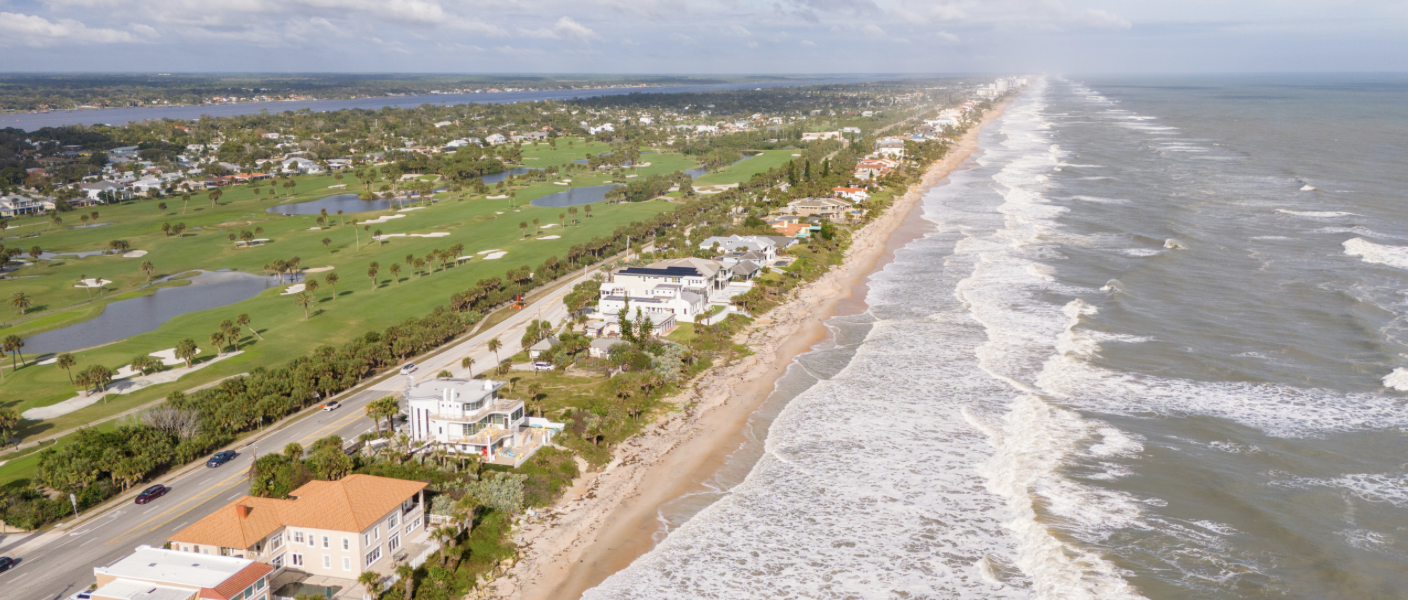
The defining failure wasn’t secrecy or records management. It was that a handful of organized opponents were effectively allowed to dictate outcomes, even though the project complied with existing rules and planning frameworks. Rather than enforcing adopted policy, elected officials treated protest volume as a proxy for merit.
This was red tide by capitulation. When commissions substitute crowd management for governance, the result isn’t compromise — it’s paralysis. And when new housing can be stalled simply by being unpopular with nearby residents, the message is clear: the rules exist until someone objects loudly enough.
Chronic Bloom
NIMBY veto power and the slow strangulation of housing supply
Across Florida in 2025, multiple local governments responded to organized neighborhood opposition by delaying, downsizing, or effectively killing housing projects that complied with adopted plans and zoning.
In these cases, the red tide wasn’t regulation itself — it was elected officials declining to exercise authority. Rather than making hard decisions and owning the consequences, commissions defaulted to delay, deferral, and “additional review,” allowing a small number of opponents to achieve what formal policy could not.
This bloom is chronic because it compounds over time. Each stalled project tightens supply. Each capitulation signals that rules are negotiable under pressure. And each missed housing opportunity pushes affordability further out of reach — all without a single vote to change the underlying policy.
If red tide thrives on inaction, NIMBY vetoes are its ideal nutrient source.
Major Bloom
City of Tallahassee / Leon County economic development apparatus
By the end of 2025, Tallahassee–Leon County could point to zero announced net-new private-sector economic development wins — no major relocations, no significant expansions, no closed deals that materially altered the local economy.

That outcome is striking given the size and cost of the region’s economic development ecosystem, which includes multiple publicly funded entities, boards, consultants, and partner organizations. Throughout the year, projects were discussed, tours were conducted, and interest was expressed. What never happened was a closing announcement. In this case, red tape didn’t kill projects outright — it simply outlasted them.
It begs the question: When will city and county leaders face the fact that the Office of Economic Vitality simply isn’t generating meaingful results?
Secondary Bloom
Government growth untethered from population growth in Leon County
New data published in 2025 showed that while Leon County’s population grew just 4.4 percent, local government staffing and associated spending increased by approximately 42 percent over a similar period.
That tenfold disparity highlights a bureaucratic bloom that expanded quietly, largely outside public debate. While residents saw modest population growth and limited private-sector expansion, government continued to grow at a pace that far exceeded the community it serves — a classic case of red tide flourishing without a corresponding public need.
Persistent Bloom
Statewide implementation of Florida’s condo safety laws
Entering 2025, condo associations across Florida were still operating under inconsistent and evolving guidance on inspection standards, reserve requirements, and enforcement timelines, despite statutory changes enacted well before the year began.
Boards faced escalating costs and conflicting advice from engineers, attorneys, and local officials. The bloom persisted not because safety was disputed, but because clarity never arrived. The longer uncertainty lingered, the more decision-making froze — particularly in older, middle-income communities least equipped to absorb sudden financial shocks.
Localized Bloom
The infamous “shed” permitting saga, City of Tallahassee
In 2025, Red Tape Florida documented a case in which a homeowner attempting to build a simple residential shed — a structure that should have triggered little more than a cursory review — instead found themselves ensnared in a months-long permitting ordeal.
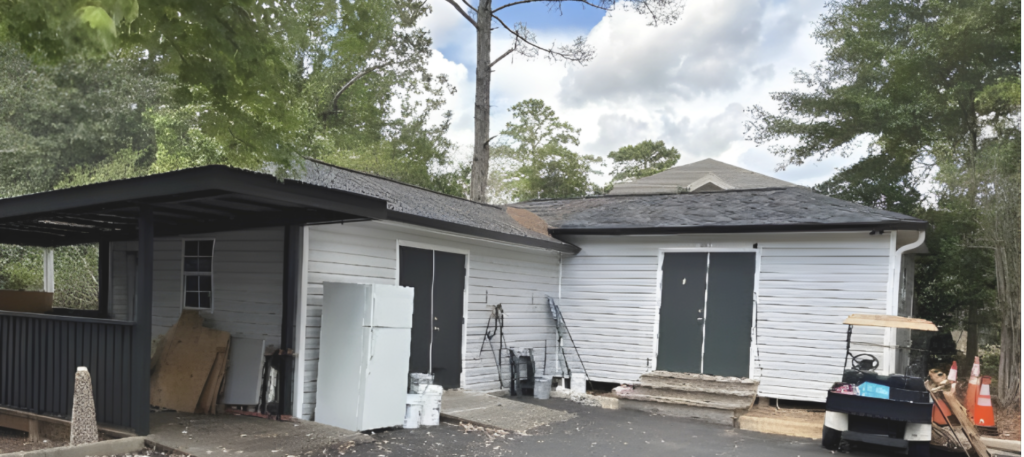
The defining fact was not complexity, safety, or neighborhood impact. It was that a modest, noncontroversial accessory structure became subject to repeated reviews, shifting requirements, and procedural resets, none of which materially improved the outcome. The shed did not change. The process did.
What made this a red tide moment was scale in miniature. If a basic shed can generate confusion, delay, and escalating compliance demands, the problem is not the project — it’s the system. Like a localized environmental bloom, the damage here was small in footprint but unmistakable in diagnosis: when process overwhelms common sense, nothing is too minor to be slowed to a crawl.
Uncontained Spread
Miami-Dade County / City of Miami permitting process
In 2025, homeowners and small businesses in Miami-Dade reported routine permits stretching months beyond stated review timelines, even for projects requiring no zoning changes, variances, or public hearings.
Rather than early containment through clear ownership of the process, applications circulated across multiple departments, each adding review without responsibility for the clock. The result was a slow but steady spread: higher carrying costs, delayed projects, and a permitting system whose complexity became the story.
Bloom Contained
Where the water cleared in 2025
Not every potential bloom turned toxic.
In a handful of cases, agencies identified problems early, clarified authority, and acted decisively — preventing delay from metastasizing. These efforts shared common traits: a single point of accountability, realistic timelines, and a willingness to say yes or no.
They weren’t flashy. They were functional. And in a year defined by red tide, that stood out. Here are some entities that found a way to do it right.
Doing it right: City of Tallahassee and Leon County DesignWorks urban design studio
DesignWorks earns a spot here because it is one of the few local-government functions in the region that’s built to solve problems early rather than multiply them later — a joint city-county design studio explicitly intended to help projects get shaped correctly before they enter the permitting grinder.
Doing it right: City of Jacksonville — Mayor Donna Deegan’s permitting overhaul
Jacksonville gets credit for publishing a clear, multi-step permitting improvement plan and backing it with measurable outcomes — including a reported reduction in permit approval timelines from about 100 days to about 40 days after process and platform changes (JaxEPICS), plus organizational moves aimed at eliminating internal silos.
Doing it right: City of Fort Walton Beach — code enforcement transparency
Fort Walton Beach stands out for doing something most Florida cities never do: treating code enforcement like a system residents should understand rather than a trap to stumble into. The city held a public Community Code Enforcement Workshop and rolled out a resident-facing assistance guide designed to help property owners navigate compliance before fines escalate.
Doing it right: Pinellas County — after-the-fact permit amnesty
Pinellas took a practical approach to compliance by waiving penalty fees for after-the-fact permits through Dec. 31, 2025 — a policy designed to pull unpermitted repairs into the light without punishing homeowners with double-fees for trying to fix the paperwork
Closing
Red Tide 2025 wasn’t about bad intentions. It was about what happens when process goes unchecked and no one owns the outcome.
Red Tape Florida will continue to document where red tape spreads — and where it’s successfully contained. Because like environmental red tide, bureaucratic blooms are not inevitable. But once ignored, they are far harder to clean up.